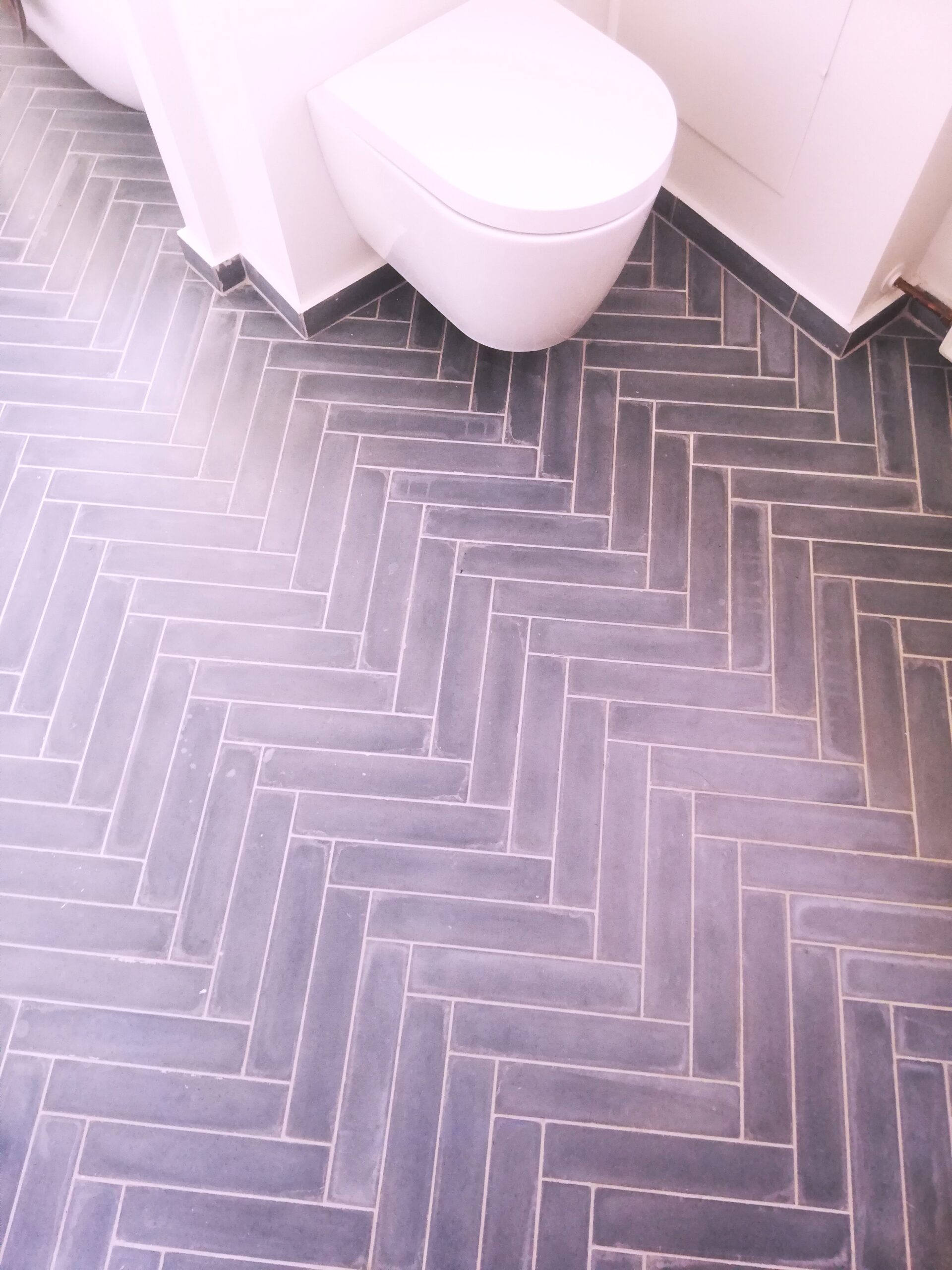
Installation and Impregnantion of Cementtiles for indoors
This guide is complementary to general knowledge of tile installation. The tile installer should therefore read these instructions before work begins. The client and/or end user may also benefit from being familiar with the installation process. At the end of this document, a cleaning guide is provided, which the user should follow when cleaning.
Please read these instructions carefully, as complaints cannot be accepted once the tiles have been installed. If necessary, contact Villa Tiles for advice before starting the installation process. Minor transport damage such as chipped edges and similar defects is not covered by warranty. A standard waste allowance of at least 10% must therefore be observed to cover possible minor damage.
Villa’s handmade cement tiles are produced using the earliest European craft methods for manufacturing durable tiles for floors and other surfaces. The tiles consist of a wear layer made from pigmented, granulated marble and a cement backing. The wear layer can be compared to a wooden floor and must therefore be impregnated during the installation process. If the tiles become damaged, the surface can be sanded and re-impregnated. The tiles have approximately 100–150 years of wear layer. If refurbishment becomes necessary, Villa Tiles can be contacted for advice.
Cleanliness during installation and impregnation is essential and must be strictly observed.
Installation Process
- Install the tiles with 1–3 mm grout joints.
- Mix tiles from different boxes during installation.
- Use a generous amount of tile adhesive to allow any height differences to be levelled out.
- Vacuum and wash the tiles with clean water without adding detergent. Use a mop and scrubbing sponge if necessary. Allow the tiles to dry.
- Check that the appearance of the tiles is as desired and that all dirt and dust have been completely removed.
- Impregnate the tiles with Fila MP90 Eco Extreme. Use a foam roller with a handle to apply an even layer. Follow the product instructions and allow the impregnation to dry.
MP90 Eco Extreme makes grout residue easier to remove and simultaneously provides a base impregnation of the tiles. - Grout the tiles using a thin, yoghurt-like grout consistency. Grout only small areas at a time.
The grout colour should be selected based on the lightest shade of the tile (for contrasting colours, follow the instructions for contrasts). If in doubt, consult Villa Tiles regarding grout colour.
Remove grout residue continuously and thoroughly. - Vacuum and wash the tiles again with clean water without detergent. Use a mop and scrubbing sponge if necessary. Allow the tiles to dry.
- Impregnate the tiles with Fila Mat (or Fila Satin for a silky sheen). Apply evenly using a foam roller with a handle. Follow the product instructions and allow to dry.
For shower areas, omit this step and follow the instructions below.
Shower Area
- Omit Fila Mat (or Satin). Instead, impregnate the surface repeatedly with Fila MP90 Eco Extreme until the tile surface is fully saturated.
- Apply up to 8–10 thin coats using a roller.
- Ensure that the grout joints are also thoroughly impregnated.
For Contrasting Patterns and/or Grout Colours (e.g. black and white)
Consult Villa Tiles if necessary.
- Immediately after bonding and cleaning, use Fila PRW200 instead of Fila MP90 Eco Extreme as a pre-impregnation to prevent grout from penetrating the tile surface.
- After grouting, clean the tiles thoroughly with Fila PS87 heavy-duty cleaner until the tiles are completely clean.
- Continue the process by impregnating with Fila MP90 Eco Extreme, followed by Fila Mat / Fila Satin, as described above.
Cleaning and Maintenance
Tile floors (excluding shower areas):
For private cleaning, use warm water with liquid brown soap or a universal cleaning agent. Brown soap leaves a protective film against dirt if used occasionally (e.g. once a month). More frequent use may have the opposite effect.
It is therefore recommended to use a universal cleaner (pH above 6.5) for daily cleaning and brown soap once a month or as needed.
If the cleaning instructions are followed, re-impregnation will not be necessary.
The tiles do not tolerate acids, i.e. cleaning products with a pH below 6.5.
Shower areas:
Use a universal cleaning agent and a scrubbing sponge. Never use acidic cleaning products.
If acidic products accidentally come into contact with the tiles (e.g. drips), clean the tiles thoroughly immediately.
Only use cleaning products with a pH value between 6.5 and 11 (never below pH 6). Ideally pH 9–10.
For heavy soiling or limescale, use a heavy-duty cleaner and a scrubbing sponge.
For commercial cleaning or particularly frequent cleaning, Villa Tiles can be contacted for individual advice.
Her stopper det