Handmade tiles guide and FAQ
Frequently asked questions | Handmade tiles by Villa
Handmade tiles guide where you will find answers to common questions about our handmade tiles, installation, maintenance, delivery, sustainability and custom-made solutions.
Tile Characteristics
Handmade tiles are crafted individually using traditional artisanal techniques. Natural variations in color, texture, surface and edges are therefore an inherent part of the material.
These variations are what give handmade tiles their depth, character and authentic appearance.
At Villa Tiles, we combine historical craftsmanship traditions with contemporary Nordic design to develop both classic handmade tiles and new tile collections.
Handmade tiles have a material depth and variation rarely found in industrially produced tiles.
While industrial tiles are typically highly uniform, handmade tiles naturally vary in tone, texture and surface. This creates a softer and more personal architectural expression.
Villa Tiles combines traditional craftsmanship with contemporary Nordic design. Our handmade tiles are therefore often used in:
- architect-designed homes
- restorations
- boutique hotels
- restaurants
- wellness spaces
- interior projects focused on materials and detail
Villa Tiles’ handmade tiles are manufactured in small batches using traditional techniques. This creates surfaces with natural variation in color, texture and tone.
Many modern industrial tiles are highly uniform or based on printed surfaces. Handmade tiles instead have depth within the material itself.
At the same time, Villa Tiles develops its own Nordic color collections and specialized tile systems that create a more personal and architectural appearance.
We offer both handmade encaustic cement tiles made according to European craftsmanship traditions and original handmade Moroccan Zellige and Bejmat tiles.
The tile types differ fundamentally in material, production method and visual expression.
Handmade Cement Tiles
Handmade cement tiles — also known internationally as encaustic cement tiles — are manufactured without firing and built in two layers:
- a surface layer made from marble powder, pigments and cement
- a strong structural base of cement and sand
They have a calm, matte and architectural appearance and are often used for:
- floors
- bathrooms
- entrance halls
- restaurants
- hotels
- larger continuous surfaces
Zellige and Bejmat are handmade Moroccan terracotta tiles.
They are shaped by hand and kiln-fired. The glazes create vibrant reflections, tonal variation and depth.
They are often used for:
- walls
- kitchens
- bathrooms
- decorative surfaces
- atmospheric interiors
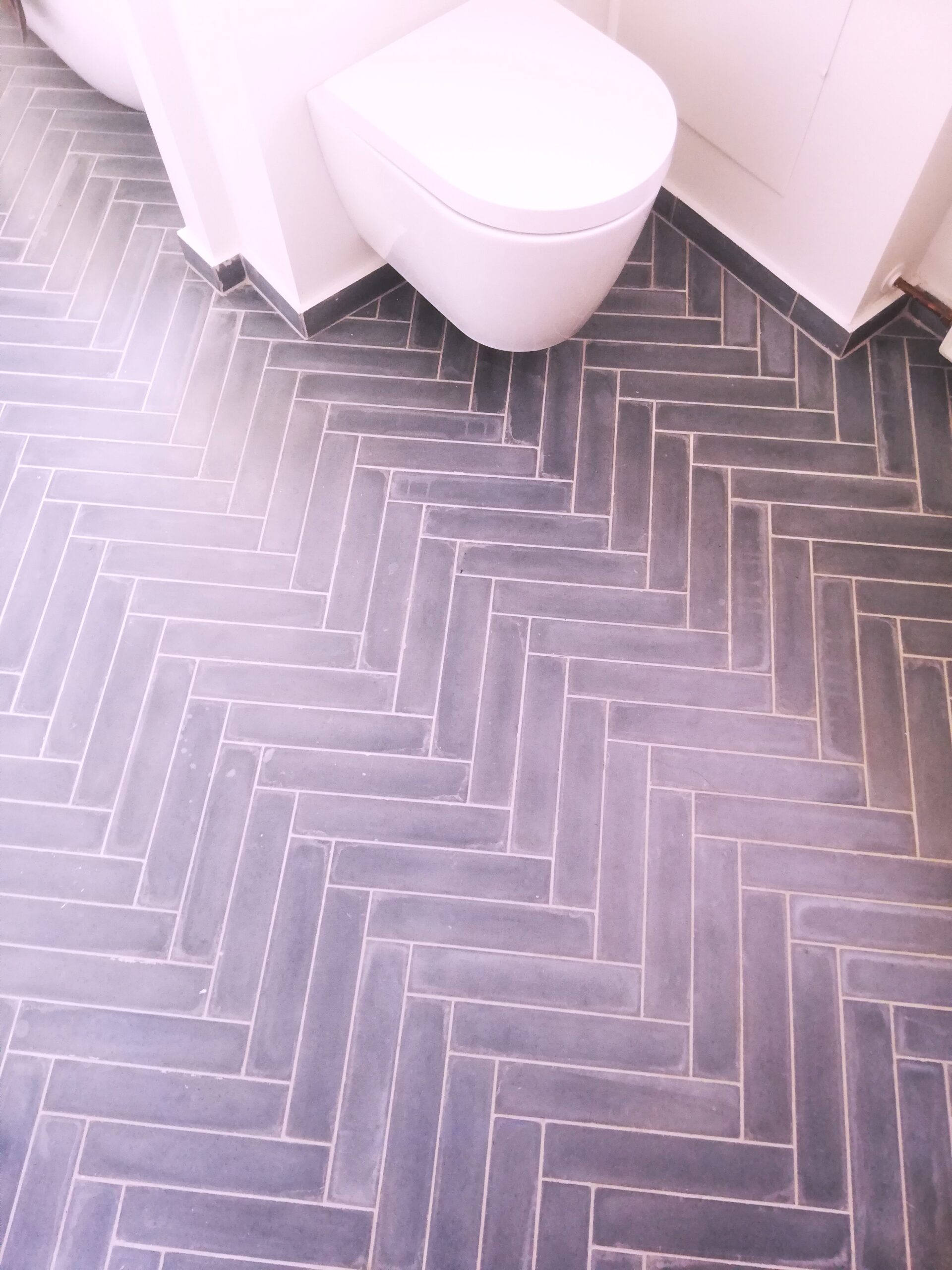
Bejmat is also manufactured in a thick floor version frequently used in herringbone patterns.
The right choice depends on the character of the project and the atmosphere you wish to create.
Both Zellige and Bejmat are traditional handmade Moroccan terracotta tiles — but they are used differently.
Zellige
- hand-cut glazed tiles
- typically around 10 × 10 cm
- primarily used on walls
- vibrant surfaces with reflections and variation
- often used for kitchens, bathrooms and decorative walls
A thicker floor version also exists.
Bejmat
- elongated handmade terracotta tiles
- typically around 14 × 4.5 cm
- approximately 20–22 mm thick
- particularly suitable for floors
- often used in herringbone patterns
Both tile types are produced according to centuries-old craftsmanship traditions from Fez, Morocco.
At Villa Tiles, we also offer custom shapes and dimensions beyond the traditional formats.
Our handmade tiles are developed to last for generations when properly installed and maintained.
Handmade cement tiles have a solid wear layer comparable to solid hardwood flooring. The surface can be refinished and resealed when necessary. These tiles can last up to 150 years.
Zellige, Bejmat and handmade terracotta tiles also have long historical traditions and develop a beautiful natural patina over time.
When glazed tiles are used on floors, it is important to note that the glaze will gradually wear with use.
All of our handmade tiles are created to age beautifully and retain their character for many decades.
Villa Tiles has developed a special outdoor version of our handmade cement tiles, allowing a continuous architectural expression between indoor and outdoor spaces.
Indoor and outdoor tiles may look visually similar, but outdoor tiles are structurally reinforced and adapted to Nordic climate conditions.
Outdoor tiles can be installed:
- in compacted gravel and sand
- on pedestal systems
- with paving pads on solid substrates
We are happy to advise on the right solution for your project.
Yes. All our handmade tiles can be used in showers when properly installed and sealed.
For Zellige, both wall and floor versions are available.
Glazed tiles generally do not require sealing, while open-pore and unglazed tiles must be thoroughly saturated and sealed — including both tiles and grout joints.
For shower areas, we recommend repeated sealing with Fila MP90 Eco Extreme until the surface no longer absorbs liquid.
Installation guidance is always provided for contractors.
Handmade outdoor tiles will naturally develop patina over time.
UV light, rain, algae and daily use affect the surface, and some colors — especially blue and green tones — will fade faster than others.
For outdoor use, Villa Tiles especially recommends:
- red earth pigments
- warm yellow tones
- beige shades
Outdoor tiles must be sealed before installation.
The tiles are developed for installation in sand, compacted gravel or on pedestal systems.
We generally do not recommend exterior adhesive installation in Nordic climates. The issue is usually not the tile itself, but moisture within the adhesive layer. During freezing conditions, expanding water can loosen the tile from the substrate.
Handmade cement tiles — also known as encaustic cement tiles — are handmade tiles manufactured without firing.
The tiles are hydraulically pressed and cured using water and air.
Villa Tiles’ handmade cement tiles are built in two layers:
- a wear layer made from marble powder, pigments and cement
- a strong structural base made from cement and sand
This creates tiles with rich color depth, natural variation and a matte surface with exceptional durability.
The technique originated in Central Europe during the mid-1800s and continues today through Villa Tiles’ contemporary Nordic interpretation. We have also developed our own colors, tile shapes and specialized tiles that allow complete architectural tile systems to be created
Cleaning & Maintenance
All handmade tiles — except glazed Zellige and glazed Bejmat tiles — must be properly sealed as part of the installation process.
Sealing helps protect the surface against:
- water
- dirt
- staining
When tiles are correctly installed and maintained, indoor surfaces will normally not require regular resealing.
However, resealing may become necessary in heavily used areas or after refinishing and polishing.
Handmade tiles should be cleaned using warm water and a mild cleaning product with a pH value above 6.5.
For everyday cleaning of encaustic tiles, we recommend a universal cleaner suitable for natural mineral surfaces.
Traditional soft soap may occasionally be used, as it can gradually build a protective layer on the surface.
Avoid acidic cleaning products, as acid can damage tiles, grout and sealers.
Handmade cement tiles and unglazed terracotta naturally absorb part of the limescale into the material itself. As a result, visible limescale deposits are often far less noticeable than on glossy glazed surfaces.
On glazed tiles such as Zellige, limescale will instead remain on the surface and become more visible over time.
For regular cleaning, we recommend a universal cleaner together with a scrubbing sponge.
For heavier limescale buildup, a deep-cleaning product may be used.
Avoid acidic cleaners, as acid can damage grout, tiles and sealers and worsen the limescale buildup.
When ordering encaustic tiles you will also receive instructions for cleaning along with the installation guide.
Installation
Most high-quality grout products can be used with our handmade tiles.
We generally recommend:
- using a relatively fine grout
- grouting smaller areas at a time
- cleaning continuously and thoroughly during installation
Grout color is typically selected based on the lightest tone within the tile.
Encaustic tiles: For special patterns or contrasting solutions, we are happy to advise on grout color selection.
Handmade tiles are typically installed with a 1–3 mm grout joint.
A generous layer of tile adhesive is used to compensate for minor variations in tile thickness.
We always recommend blending tiles from multiple boxes during installation. This creates the most balanced and harmonious overall appearance.
Cleanliness throughout the installation process is essential.
Tiles must be completely clean and dry before sealing, and grouting should only take place after the initial sealing treatment has been completed.
We recommend always to follow the instruction sheet during installation. Please note that installation instructions vary for glazed, encaustic, and clay tiles.
Delivery & Pricing
All our tiles are handmade specifically for each individual order using traditional craftsmanship techniques. Production therefore begins only after colors, patterns, shapes and formats have been selected for the project.
Typical delivery time is approximately 5–10 weeks depending on tile type, quantity and project complexity. Custom designs, special formats and larger architectural projects may require additional production time.
In return, you receive tiles tailored specifically to the project’s architecture, materials and color palette — rather than standard stock products.
Please contact us for current delivery estimates for your specific project.
Shipping costs depend on the order size and total square meters.
One pallet typically holds up to approximately 25 m² of tiles and usually costs around DKK 790 / 109 Euro for delivery within most parts of Denmark. In other countries please ask for the the freight costs as they will differ according to destination, quantity and weight.
Color samples are shipped with PostNord for 69 Euro to most of Europe.
For larger projects or special delivery conditions, we are happy to provide a specific shipping quotation.
If transport damage occurs, please contact us as soon as possible — and no later than 6 days after delivery.
We kindly ask you to send photos of:
- the packaging
- the pallet
- the damaged tiles
Minor transport damage such as small edge chips or isolated imperfections will normally fall within the recommended 10% surplus allowance.
In the case of more significant damage, we will of course help find a solution as quickly as possible.
As all tiles are produced specifically for each individual order, tiles cannot be returned or cancelled after purchase.
The tiles are custom-made products manufactured according to the customer’s selected:
- colors
- shapes
- patterns
- sizes
- special details
Orders are therefore binding once production has been confirmed.
We always recommend carefully reviewing materials, colors and quantities before ordering. For this reason, we also offer color samples and personal guidance to help ensure the right solution for each project.
As with all building materials, tiles should always be inspected before installation.
Once tiles have been installed, they can no longer be evaluated or returned as untreated products. We therefore recommend that both the client and installer review the tiles carefully before installation begins.
We especially recommend checking:
- color variation
- surface variation
- blending between boxes
- possible transport damage
With handmade tiles, the most beautiful and balanced result is often achieved by mixing tiles from several boxes during installation.
Small variations are a natural part of handmade tiles and an essential part of the expression many people seek in handcrafted materials.
At Villa Tiles, these variations create surfaces with depth, texture and a more authentic architectural character than industrially manufactured standard tiles.
This may include:
- slight tonal differences
- small height variations
- irregular edges
- vibrant glazes
- natural surface textures
These characteristics occur because the tiles are handmade using traditional techniques rather than industrial mass production and complete machine uniformity.
They are therefore considered part of the material’s natural character and not product defects.
Handmade tiles are produced in smaller batches rather than as industrial mass-produced products with identical batch numbers.
Variations may therefore occur between different productions in:
- color tone
- texture
- surface appearance
- material character
This applies also to handmade cement tiles, where natural materials such as marble powder and pigments may vary slightly from batch to batch.
If a project needs to be completed as one continuous installation, we therefore always recommend ordering the full quantity at the same time.
Handmade tiles are living materials and are not manufactured as industrial standard products.
Variations in:
- color play
- tone
- texture
- surface appearance
are therefore a natural part of the tiles’ expression.
Handmade cement tiles are produced using real marble powder and natural pigments, which may react differently during production. The same applies to Zellige, Bejmat and handmade terracotta floor tiles.
Especially with Zellige and Bejmat, variation in glaze and color intensity is an essential part of the aesthetic that gives surfaces life and depth.
These variations are therefore not defects — but a central part of authentic craftsmanship.
In our webshop, you can order more than 150 different handmade tiles and view prices per square meter directly on each product page.
You can search by:
- shape
- color
- pattern
- tile type
For example:
- octagon
- square
- Marguerite
- blue
Product pages also include images, descriptions and additional technical information.
If you are looking for an overview of prices for handmade cement tiles, you can also find pricing within the tile shape and size overview.
Pricing is primarily determined by:
- shape
- size
- production type
— rather than by pattern or color alone.
Sustainability
Yes — especially when considering lifespan, repairability and long-term resource consumption.
Handmade cement tiles are developed to last for generations and have an expected lifespan of approximately 100–150 years when properly installed and maintained.
Rather than being replaced, the tiles can be:
- maintained
- refinished
- resealed
- repaired
This reduces the need for new production and minimizes waste throughout the building’s lifetime
Handmade cement tiles are produced without firing.
Instead, the tiles cure using water and air under hydraulic pressure. Production therefore requires significantly less energy than traditional ceramic tiles, which are typically fired at temperatures around 1,200°C.
At the same time, the tiles consist of pure mineral materials such as:
- sand
- cement
- marble powder
- natural pigments
without plastic or artificial surface films.
Two-layer handmade cement tiles have already proven their durability through historic floors from the late 19th century that are still in use today.
With proper installation and maintenance, the tiles are developed to last approximately 100–150 years.
This makes them a material capable of following a building through generations rather than requiring continuous replacement.
Yes. The tiles have a solid wear layer that makes it possible to:
- refinish
- restore
- reseal
the surface multiple times throughout its lifespan.
Minor damage can often be repaired locally without replacing the entire floor, reducing both waste and resource consumption.
Yes. The tiles consist of mineral and inorganic materials and do not emit VOCs or other harmful substances into the indoor environment.
They also contain no:
- plastic
- photographic films
- fossil-based surface materials
This creates a solid and natural building material with high material purity.
In most cases, yes.
Plastic-based flooring such as LVT and SPC typically has a shorter lifespan and is based on fossil-derived raw materials. These materials are often replaced multiple times during a building’s lifetime.
Handmade cement tiles are instead:
- solid
- repairable
- long-lasting
- mineral-based
When the tiles eventually reach the end of their lifespan, they can also be crushed and reused as mineral construction material.
The two-layer technique means that the marble-based material is used only in the upper wear layer where it serves a functional purpose.
The structural layer beneath consists of a strong cement and sand composition.
This provides:
- high durability
- long lifespan
- more resource-efficient material use
without compromising quality.
Yes. The tiles have high thermal mass and conduct heat efficiently.
This makes them particularly suitable for underfloor heating systems, where they help create a stable and comfortable indoor temperature.
Yes. At the end of their lifespan, the tiles can be crushed and reused as mineral construction material or aggregate.
The material does not leave behind problematic plastic or composite waste.
Lifespan is one of the most important factors in sustainable construction.
Materials that last for generations reduce:
- the need for replacement
- new production
- transportation
- waste
A floor that can remain in use for decades or centuries will often have a significantly lower overall environmental impact than materials that must be replaced repeatedly throughout a building’s lifetime.
Yes. Handmade cement tiles have a strong historical connection to both Danish and European architecture from approximately 1880–1950.
They are therefore frequently used in:
- restoration projects
- heritage buildings
- classic villas
- historic properties
where durable and historically appropriate materials are desired.
Many people choose handmade tiles because they want an honest and solid material without plastic, photographic films or artificial surfaces.
The tiles:
- are through-colored
- can be repaired
- develop natural patina
- gain character over time
Instead of wearing out and being discarded, the material often becomes more beautiful through decades of use.
Cement certainly has a climate impact, and this is something we actively relate to.
We continue to work with cement primarily because of the material’s exceptional durability and extremely long lifespan.
Our handmade cement tiles are developed to last at least 100–150 years and can be:
- maintained
- refinished
- repaired
- restored
rather than replaced.
In practice, this often means the floor is produced only once during the building’s lifetime. This significantly reduces resource consumption, waste and the need for future production.
At the same time, the tiles are produced without energy-intensive firing. Unlike ceramic tiles, they cure using water and air under hydraulic pressure, resulting in substantially lower production energy consumption.
The tiles are also constructed in two layers, where marble powder is used only in the upper wear layer. This creates a more resource-efficient construction.
At Villa Tiles, we therefore view sustainability as more than a single CO₂ number. Lifespan, repairability, material purity and recyclability are equally important factors when evaluating the overall environmental impact of a building material.
Ordering & Project Guidance
You are always welcome to contact Villa Tiles for personal guidance regarding tiles, colors, materials and interior solutions.
We help both private homeowners, architects and professionals find the right solution for each project — whether it involves a small bathroom or a larger architectural interior.
Use our contact form or contact directly:
Phone: +45 24 20 93 29
E-mail: hf@villahandmade.dk
No. At Villa Tiles, all tiles are manufactured specifically for each individual project rather than kept as standard stock items.
This allows far greater freedom to choose the exact colors, patterns, shapes and details that suit the project.
Many clients choose Villa Tiles precisely because the solution can be adapted to the room’s architecture, light and materials — rather than being limited to fixed standard collections.
You can order 3 free color samples to experience the tones, textures and surfaces at home before production begins.
Orders placed through the webshop can be paid by card.
For orders above DKK 5,000, we also offer payment via bank transfer with:
- 50% upon order confirmation
- 50% before delivery
For free color samples, only the shipping cost is charged. In Denmark these orders can be paid using MobilePay.
Yes. Many clients use Villa Tiles both as a design partner and tile supplier.
We assist with:
- composition of colors and materials
- selection of patterns and shapes
- development of custom tiles
- relationships between rooms and surfaces
- adaptation to existing architecture
- solutions for restoration and new construction
The process often begins with an idea, an atmosphere or a collection of inspiration images. From there, we help transform these ideas into a complete tile solution that works both visually and practically. The goal is not simply to choose individual tiles — but to create a cohesive architectural expression.
Yes. A large part of Villa Tiles’ work involves developing solutions for specific architectural projects.
We continuously work with:
- new colors
- custom formats
- special patterns
- technical specialty tiles
- tailored surface finishes
- custom edges and transitions
This makes it possible to create highly project-specific solutions that do not exist as standard products.
At the same time, the existing collection already contains thousands of possible combinations across colors, shapes and patterns, meaning many custom wishes can often be achieved without developing entirely new tiles.
Yes. At Villa Tiles, all tiles are manufactured specifically for each project.
You can freely combine different:
- shapes
- colors
- patterns
- sizes
- specialty tiles
Many clients also choose solutions such as cove tiles, skirting tiles, border tiles or slip-resistant tiles to create a more cohesive and architectural result.
We are happy to help develop a solution tailored precisely to the proportions, light and materials of the space.
The process typically begins with a dialogue about the project’s style, architecture and desired atmosphere.
From there, we help with:
- color and shape suggestions
- pattern compositions
- proportions and transitions
- adaptation to the room’s materials and light
Once the design and colors are approved, the tiles are handmade specifically for the project using traditional craftsmanship techniques.
On the website, you will also find guides and overviews of colors, shapes and patterns that allow you to explore different combinations yourself.
At Villa Tiles, we always recommend ordering at least 10% extra tiles.
This is due to factors such as:
- cutting during installation
- natural sorting
- minor transport damage
- future repairs
With handmade tiles, it is also important to order the full quantity for the project at the same time, as color and material variation naturally occur between productions.
Extra tiles therefore help ensure both a smoother installation process and the possibility of future maintenance.
No. Villa Tiles supplies both small private projects and larger architectural and commercial projects.
Handmade cement tiles are typically produced from approximately 5 m², while Zellige and Bejmat can often be supplied in very small quantities depending on color, size and format.
Many clients begin with projects such as:
- a guest bathroom
- a shower niche
- a kitchen area
- an entrance hall
- a small restoration project
Villa Tiles often recommends open-pore, lime-based tiles for shower areas.
Materials such as:
- handmade cement tiles
- unglazed terracotta tiles
can absorb part of the limescale from water into the material itself. This means limescale deposits and white marks often become far less visible than on glossy glazed surfaces.
With glazed tiles, limescale will typically remain visible on top of the surface and require more frequent cleaning.
It is important that lime-based materials are never cleaned with acidic products, as acid dissolves the lime within the material itself. Instead, pH-neutral cleaners or products with a pH above 6.5 should be used.
Handmade cement tiles naturally provide good slip resistance and are therefore highly suitable for bathrooms and wet rooms.
However, we recommend:
- avoiding glossy wax finishes in bathrooms
- avoiding wax entirely inside shower areas
as polished surfaces can increase slipperiness.
Glazed handmade tiles can themselves be more slippery, but because they are often installed in smaller formats with many grout joints, the grout lines also create a natural slip resistance.
Design & Material Choices
Yes. At Villa Tiles, handmade tiles can be tailored through combinations of:
- colors
- patterns
- shapes
- sizes
- specialty details
We also develop custom designs for private homes, hotels, restaurants and architect-designed projects. Many clients feel that the large number of possible combinations gives them the experience of creating their own personal tiles — even within the existing collection
The most harmonious bathrooms are often designed as complete architectural compositions rather than as isolated tile selections.
At Villa Tiles, we therefore work with relationships between:
- floors and walls
- corners and transitions
- skirting details and edges
- specialty tiles and finishing elements
This creates calmer lines, better proportions and a more cohesive appearance without random standard solutions.
Handmade tiles possess a material depth, texture and variation rarely found in industrial standard tiles.
At Villa Tiles, we also work with:
- cove tiles
- specialty edges
- slip-resistant tiles
- outdoor tiles
- custom colors
- cohesive tile systems
This gives architects and designers significantly greater freedom to create well-resolved spaces with strong relationships between materials, proportions and details.
The webshop only displays a small part of the possibilities available at Villa Tiles.
In practice, the collection consists of more than 100,000 possible combinations of:
- shapes
- colors
- patterns
- specialty tiles
- surfaces
Many solutions are also developed specifically for individual projects and therefore do not exist as standard online products.
Yes. The webshop primarily functions as inspiration and only shows a selection of available possibilities.
Handmade cement tiles can be combined in thousands of variations, and many clients develop their own solutions for:
- restorations
- architectural projects
- bathrooms
- kitchens
- custom interiors
Zellige, Bejmat and handmade terracotta floor tiles can also be produced in additional sizes and shapes beyond those shown online.
At Villa Tiles, we work with complete tile systems where floor tiles, wall tiles and specialty tiles are designed to function together both visually and technically.
This may include:
- cove tiles
- skirting tiles
- border tiles
- corner solutions
The result is softer transitions, calmer lines and a more architectural appearance than traditional standard solutions.
Yes. This is one of Villa Tiles’ special areas of expertise.
Villa Tiles has developed patented outdoor handmade cement tiles adapted to Nordic climates, making it possible to create continuity between:
- indoor and outdoor spaces
- terraces and bathrooms
- courtyards and kitchens
- winter gardens and living spaces
Many clients choose this solution to create a more cohesive architectural experience throughout the project.
Yes. At Villa Tiles, tiles can be combined across the entire project so floors, walls and specialty details create a unified architectural expression.
This includes:
- floor tiles
- wall tiles
- cove tiles
- skirting tiles
- border tiles
- corner solutions
- slip-resistant tiles
- outdoor tiles
Villa Tiles’ Nordic color collection was developed specifically for handmade encaustic cement tiles.
The colors are inspired by:
- Nordic nature
- limewash tones
- classic Danish design traditions
- the distinctive Nordic light
The result is calm, matte and tactile colors with natural depth and variation — developed to work beautifully in both modern and classical architecture.
About Villa Tiles
Villa Tiles is a manufacturing and design company — not a traditional tile retailer.
We develop, design and manufacture handmade tiles specifically for each individual project. This provides far greater freedom than standard collections from conventional tile stores.
Clients can therefore customize:
- colors
- shapes
- patterns
- specialty tiles
- surfaces
so the final solution fits precisely with the project’s architecture and materials.
Villa Tiles’ colors, shapes and tile systems are developed collaboratively within the workshop.
Technical solutions such as:
- cove tiles
- slip-resistant tiles
- outdoor tiles
have been developed by founder Helle Fog.
The same applies to patterns including:
- Marguerite
- Svendborg Flower
- Musel
- Path
- Continuum
Villa Tiles primarily works with historic European craftsmanship techniques that continue to be developed both technically and aesthetically.
Villa Tiles works with the historic European craftsmanship tradition behind two-layer handmade cement tiles — internationally known as encaustic cement tiles.
The technique originated in Central Europe during the 19th century and today exists in countries including:
- Spain
- Italy
- Germany
- Vietnam
- Mexico
- Morocco
Villa Tiles operates a workshop in Morocco because the craftsmanship tradition remains particularly strong there.
What distinguishes Villa Tiles from many other producers is the overall design and system approach:
- Nordic color collections
- proprietary patterns
- specially developed tile shapes
- cove and specialty tiles
- cohesive tile systems
- solutions developed for Nordic architecture
The goal is not simply to produce individual tiles — but to create complete architectural tile solutions with high material quality and extensive design freedom.